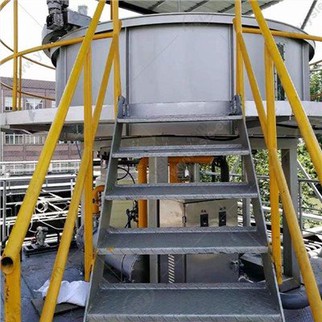
1. The bubbles produced by the dissolved air tank are small, with a particle size of 20-40um, and the adherent flocs are firm, which can achieve good air flotation effects;
2. Less flocculant is used and the cost is reduced;
3. The operating procedures are easy to master, the water quality and quantity are easy to control, and the management is simple.
4. Equipped with a backwash system, the releaser is not easily blocked.
What are the reasons for poor air flotation effect?
1. Releaser failure: The releaser is generally not clogged. If it is clogged, large bubbles will appear in the air flotation contact area, and the bad sticky air will float and impact the scum, causing the scum to lose stability and cause the water to become turbid.
2. Slag scraping problem: The slag scraper moves too fast when scraping, causing the lower scum to be sheared, broken, and turbulent and flowed out with the water. Of course, if the slag is not scraped in time and too much mud accumulates at the bottom, it will also cause The air flotation effect is not good.
3. Sewage flow: The influence of sewage flow on the treatment effect cannot be ignored. During the operation of the air flotation equipment, the water distribution in each air flotation tank needs to be even. Changes in flow rate mean changes in the amount of contaminants, so the dosage of reagents needs to be adjusted in time to achieve the best results.
When the sewage flow rate is too large, the horizontal flow rate of the air flotation tank is accelerated and the residence time is shortened, which is not conducive to the floating separation of flocs; if the flow rate is too high, the turbulence of the water flow in the separation zone will be too high, resulting in the breakage of the foam-flocculation combination. When the water volume is too large, the height of the outlet weir should be adjusted in time to prevent sewage from entering the scum system.
4. The impact of flocculant and pH on flotation: Generally speaking, the higher the chemical oxygen demand concentration of raw water, the more chemicals need to be added. The higher the concentration of suspended solids in the raw water, the greater the dose of drug that needs to be added. There is an optimal dosage for flocculation. Exceeding this dosage will reduce the flocculation effect, and exceeding too much will have the opposite protective effect. In addition, attention should also be paid to the dosage ratio and order of administration.
Coagulants (such as PAC) can destroy hydrophobic groups during the hydrolysis process, causing suspended solids and oil to flocculate with each other, and at the same time causing some dissolved proteins to precipitate in the form of small particles.
The flocculant PAM has a large molecular weight and has the functions of adsorption, bridging, connection, and cleaning. It makes the small particles initially formed under the action of coagulant adsorb and connect with each other, thereby forming large flocs and quickly separating from water. In this way, under the joint action of PAC and PAM, larger flocs are formed, and the wastewater needs to be added with PAC before PAM.
At present, most flocculants PAM are acidic flocculants with suitable pH value. When the pH value of the sewage exceeds the optimal pH value, it will cause the floc to dissolve or break, which will have a very negative impact on the air flotation separation of the air flotation equipment. Therefore, during operation, the pH of the incoming water should be monitored.
5. Dissolved air water volume, reflux ratio and dissolved air tank pressure: The turbidity of the dissolved air water source should be low. The lower the turbidity, the easier it is for air to dissolve; the dissolved air water volume and reflux ratio (dissolved air water volume/original water volume) are based on the water quality. Come and decide.