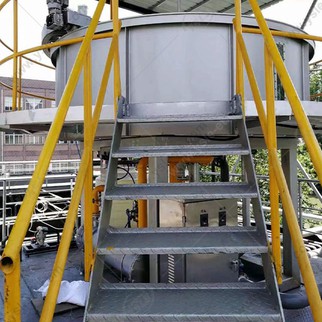
Air flotation technology is a physical and chemical treatment method that injects gas into water to form bubbles in the water, thereby floating pollutants suspended in the water to form a foam layer, which is then removed by a scraper or other equipment. , thereby achieving the purpose of purifying water quality.
In air flotation technology, the gas usually used is air or oxygen. Through the injection of gas, pollutants in the water interact with bubbles to form a foam layer. In this process, the size and number of bubbles are very critical, because the smaller the bubbles, the larger the surface area and the larger the contact area with pollutants, making it easier to float pollutants. The number of bubbles depends on the speed and pressure of gas injection. Generally speaking, the faster the gas injection speed and the greater the pressure, the greater the number of bubbles generated.
In addition to the size and number of bubbles, the distribution and movement of bubbles also need to be considered in air flotation technology. Normally, bubbles will form a foam layer in the water, and this foam layer will move with the movement of the water flow, thereby bringing pollutants to the upper part of the sewage treatment equipment. In this process, the thickness and density of the foam layer are also very important, because the thicker the foam layer and the greater the density, the easier it is to float pollutants.